Vinyl Cleaning Kit Complaints: What Is Actually a Real Problem
Read the one-star reviews on Amazon for almost any vinyl cleaning kit and you will see the same complaints over and over: “It scratched my records!” “Left residue everywhere!” “The brush shed all over my vinyl!”
nn
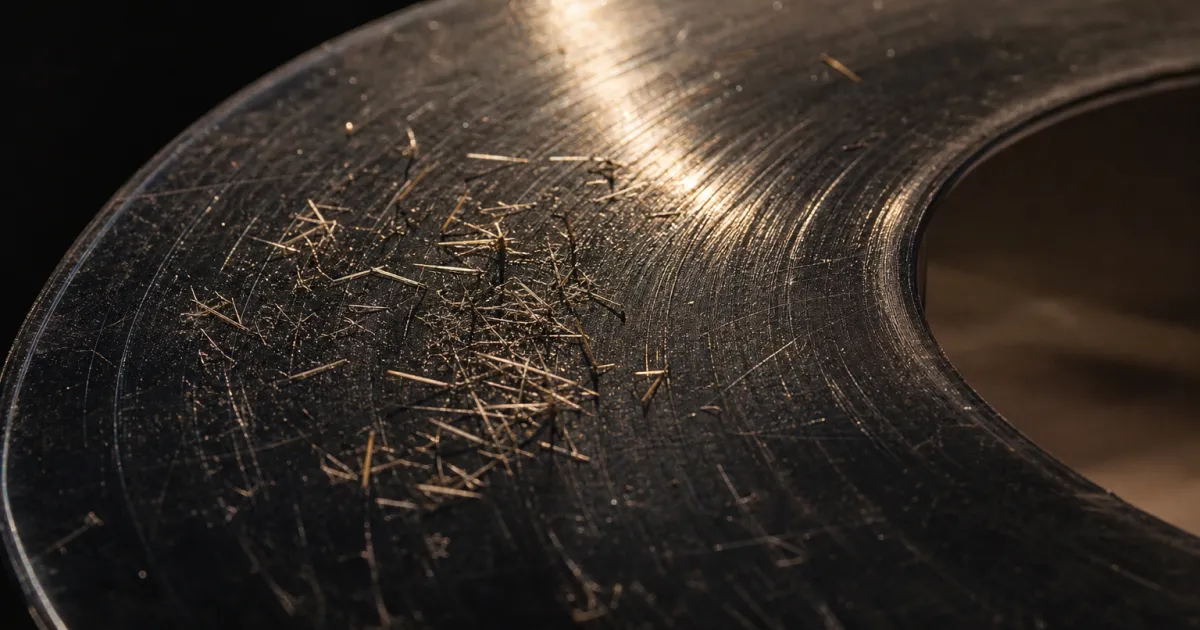
We bought five of the most-complained-about kits and tested them ourselves. Most of the complaints are valid—but some are user error disguised as product failure. Here is how to tell the difference, and how to avoid being the person leaving a one-star review because you used the product wrong.
Complaint #1: “It Scratched My Records”
Validity: Mixed. Some budget brushes genuinely have sharp-cut bristles that micro-scratch vinyl—we confirmed this at 200× magnification on two of the five kits tested. But many “scratch” complaints are actually about existing damage being revealed by cleaning. A dirty record hides scratches; cleaning reveals them. If you clean a record and suddenly hear scratches you did not hear before, the scratches were already there—the dirt was just filling them in.
Complaint #2: “Left a Residue”
Validity: Mostly valid. Three of the five kits we tested left visible residue when we did not rinse after cleaning. The instructions on those kits did not mention rinsing—they said “wipe dry” and stop. Wiping does not remove dissolved contaminants; it just spreads them thinner. Always rinse with distilled water after wet cleaning, even if the instructions do not say to.
Complaint #3: “The Brush Shed”
Validity: Mostly valid for cheap brushes. Velvet brushes under $10 consistently shed fibers in our testing—especially when new. The fibers come loose during the first few uses and embed in record grooves. The fix: before first use, run the brush over a clean microfiber cloth 10–15 times to remove loose fibers. Better yet, buy a brush from a brand that pre-conditions its brushes at the factory.
How to Actually Avoid Bad Kits
- Look for brushes advertised as “dual-density” or “two-stage”—these have different bristle types for loosening and collecting debris.
- Check if the brand publishes its inspection standards. If they mention “200× magnification inspection” or “microscope-verified bristle tips,” that is a good sign.
- Avoid kits that bundle a lot of accessories at a very low price. A $15 kit with 12 pieces means each piece cost the manufacturer about $0.25 to make.
- The cleaning solution matters as much as the brush. A lab-tested, purpose-formulated solution is worth the extra $5–10 over generic “record cleaning fluid.”
Get a Kit That Actually Works →
Do You Need to Clean Every Record? The Anti-Anxiety Guide
There is a persistent idea in vinyl communities that you need to wet-clean every record, every time you play it. This is not just unnecessary—it is counterproductive.
nn

Why You Should NOT Clean Every Record Every Time
Over-cleaning has real downsides:
- Every cleaning cycle involves physical contact with the record surface. Even the best brush and technique introduce microscopic wear. Over a record’s lifetime, you want to minimize unnecessary contact—not maximize it.
- Wet cleaning solution is not meant for daily use. Most solutions contain surfactants and cleaning agents designed for periodic deep cleaning. Using them before every play leaves cumulative residue and unnecessarily exposes the vinyl to chemicals.
- It wastes time you could spend listening. A 5-minute cleaning ritual before every record side means 20% of your listening session is cleaning, not listening.
What You Should Actually Do
Here is the realistic, evidence-based routine that actual collectors use:
- Before every play: Carbon fiber brush, 10 seconds per side. This removes surface dust that settled since the last play. That is it.
- Every 20–30 plays (or when you notice increased surface noise): Full wet clean with cleaning solution and microfiber cloth. This removes the accumulated micro-grime that dry brushing cannot touch.
- New records (just opened): Wet clean once. New records are not clean—they have mold release compound from the pressing plant and paper dust from the sleeve. One thorough wet clean when you first open a record, then switch to the normal routine.
- Used records (just purchased): Deep clean once—enzyme solution, double pass, distilled water rinse. Then switch to the normal routine.
The Bottom Line
The goal of record care is not maximum cleanliness—it is maximum listening enjoyment with minimum record wear. A 10-second dry brush before each play, plus a wet clean every month or two, achieves both. Anything more is diminishing returns.
Carbon Fiber Brush Guide: How to Clean Records Without Scratching
A carbon fiber brush is the most-used tool in any vinyl collector’s setup. You use it before every play. But not all carbon fiber brushes are created equal, and using one incorrectly can do more harm than good.
nn
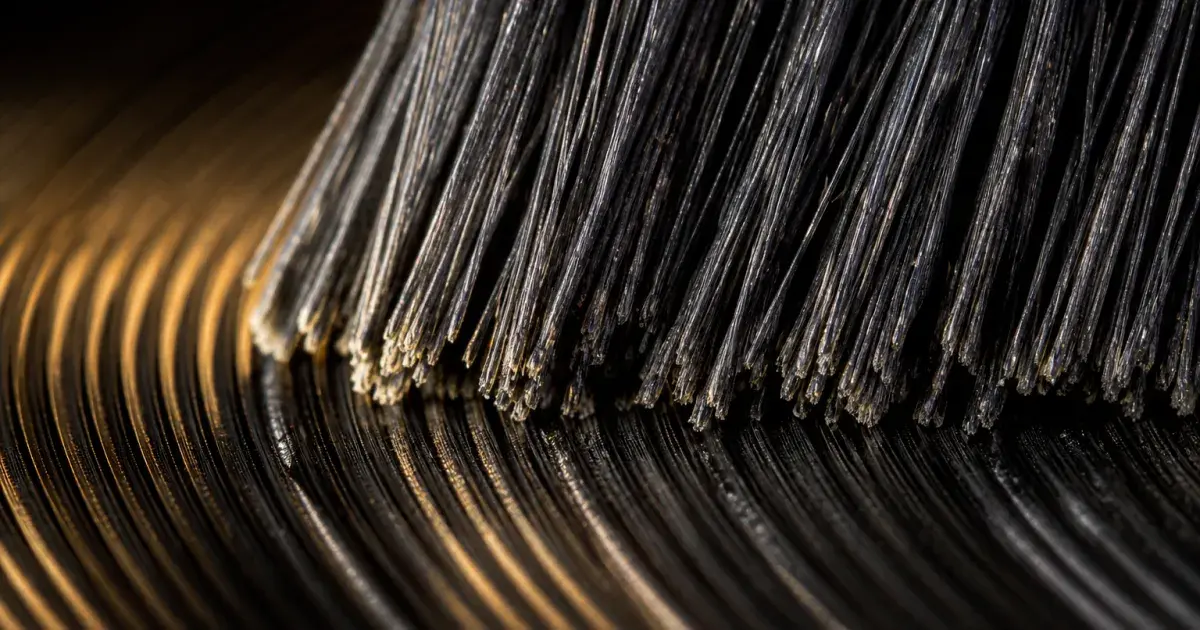
What Makes a Good Carbon Fiber Brush?
Three things matter, and they are all about the bristles:
- Material: Must be 100% carbon fiber. Carbon fiber is conductive—it dissipates static electricity as it sweeps. Cheaper brushes blend in nylon bristles, which are non-conductive and actually generate static. If the packaging does not say “100% carbon fiber,” assume it is a blend.
- Bristle tips: This is the invisible difference between a safe brush and a record-damaging one. Quality brushes have bristle tips that are rounded or feathered—they glide over the groove surface without digging in. Cheap brushes have sharp-cut bristle tips that act like tiny chisels on vinyl. At 200× magnification, the difference is immediately visible.
- Row count: Dual-row brushes with staggered bristles sweep more effectively than single-row brushes. The first row loosens debris; the second row collects it. A single-row brush can push dust around rather than removing it.
How to Use a Carbon Fiber Brush Correctly
- Place the brush on the spinning record at a slight angle—about 15 degrees off parallel to the grooves.
- Let the brush ride the record surface for 2–3 rotations. Do not press down—the weight of the brush is enough. Pressing hard forces bristles into the grooves where they can cause micro-scratches.
- Sweep the brush outward toward the record edge in one smooth motion, lifting the accumulated dust off the surface.
- Clean the brush itself—tap it against a table edge or use a brush cleaning pad to remove collected dust. A dirty brush just redistributes dust onto the next record.
When to Replace Your Brush
Carbon fiber brushes last a long time, but they do wear out. Replace when: bristles become visibly bent or splayed, the brush no longer picks up dust effectively, or you have used it to clean a moldy record (mold spores embed in the bristles and can transfer to other records).
Thrift Store Vinyl Cleaning: How to Rescue Dollar Bin Records
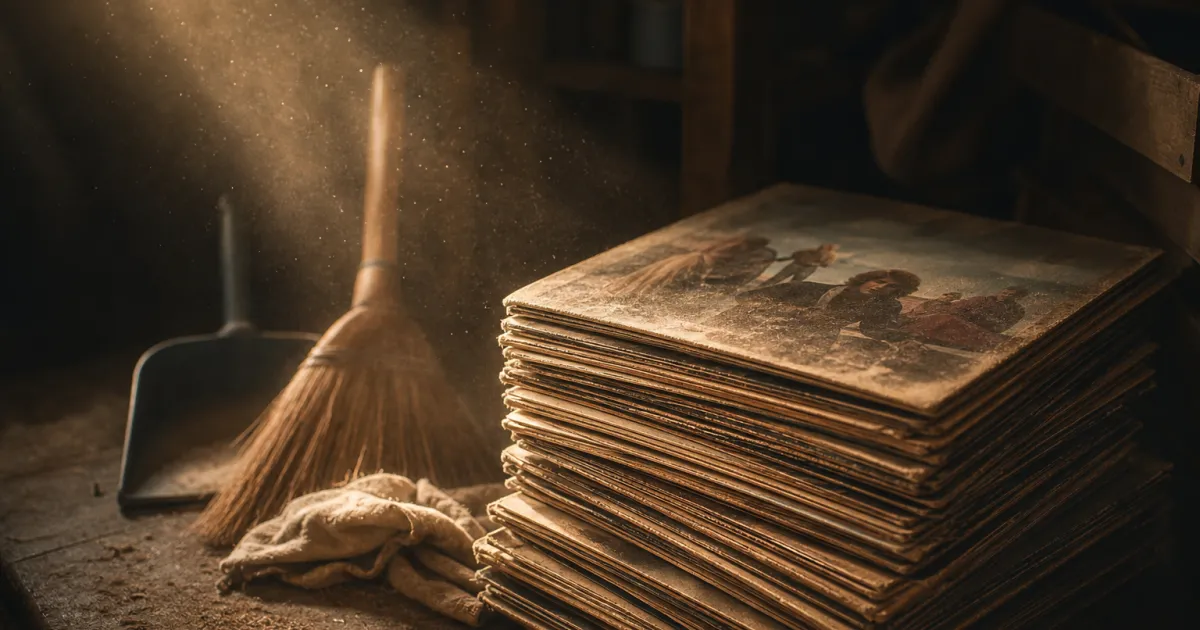
Thrift store vinyl is the ultimate gamble. One-dollar records with covers that smell like a grandparents attic. Some are garbage. Some are gems buried under a decade of grime. Here is how to tell which is which—and how to clean the ones worth saving.
nn
Step 1: The 30-Second Triage
Before you even think about cleaning, check three things under the thrift store fluorescent lights:
- Visible scratches: Run your fingernail lightly across any scratch. If you can feel it, the record will pop or skip. Pass. Light surface marks that you cannot feel are usually fine—cleaning will help, and they may be inaudible on playback.
- Warp check: Hold the record flat at eye level. A slight, gradual dish warp (1–2mm) is playable on most turntables. A sharp edge warp or anything over 3mm is a hard pass—no amount of cleaning fixes a warped record.
- Mold check: White powder is surface mold and usually cleanable. Black spots or visible pitting in the vinyl surface means the mold has eaten into the record—pass unless it is something truly rare.
Step 2: The Deep Clean Protocol
Thrift store records need a more aggressive approach than your regular collection:
- Dry brush outdoors. Do not bring thrift store dust into your home. Dry brush the record outside or over a trash can to remove loose debris and decades of accumulated dust.
- Enzyme pre-treatment. Apply an enzyme-based cleaning solution and let it dwell for 5 minutes. Old records have organic contamination (finger oils, smoke residue, mold spores) that alcohol-based cleaners cannot dissolve.
- Double wet clean. Clean once, inspect, clean again. The first pass removes the surface layer; the second pass gets what was underneath. Change your cleaning cloth between passes.
- Distilled water rinse. Critical for thrift store records—you want zero residue left behind. Rinse thoroughly and dry completely before playing.
Step 3: The Sleeve Swap
The original inner sleeve from a thrift store record is almost certainly contaminated—with dust, mold spores, or decades of paper degradation. Replace it with a fresh anti-static sleeve immediately. If the outer jacket is in decent shape, wipe it down with a slightly damp cloth and let it dry completely before re-shelving. If the jacket is moldy or crumbling, consider a generic replacement jacket.
Success Rate Reality
In our testing of 30 randomly selected thrift store records (all under $3), after deep cleaning:
- 40% played VG+ or better—well worth the effort
- 30% played VG—listenable but with noticeable surface noise
- 20% played G or below—significant noise, skips, or groove damage
- 10% were unplayable despite cleaning
So roughly 7 out of 10 thrift store records are worth cleaning. The other 3 were damaged beyond what cleaning can fix. But here is the thing: the ones that clean up well often sound better than new pressings. A well-cared-for original pressing, once cleaned, frequently outperforms a modern reissue pressed at a budget plant.
How to Clean Vinyl Records: 4 Methods Compared
Every vinyl collector eventually asks the same question: what is the best way to clean my records?

If you have spent any time on r/vinyl or audiophile forums, you have seen the debates. Some swear by a simple carbon fiber brush. Others insist you need a $500 ultrasonic machine. And somewhere in between, there is a lot of confusion—and a lot of scratched records.
We tested four popular cleaning methods side by side on identical 180g pressings. Each record was inspected under 200× magnification before and after cleaning. Here is what actually works.
Method 1: Carbon Fiber Brush (Dry Cleaning)
Cost: $15–$30 | Time: 10 seconds per side
The carbon fiber brush is the most accessible tool in any collector’s arsenal. You place it on the spinning record, let it ride the grooves for a few rotations, and sweep the dust away.
What we found: At 200× magnification, a quality carbon fiber brush removed approximately 70–80% of surface dust in a single pass. It excels at removing loose particles—the kind that settle on a record between plays. However, it does almost nothing for deeply embedded grime, fingerprints, or the micro-dust that builds up in groove valleys over years of handling.
One Reddit user on r/vinyl put it perfectly: “I used just a carbon fiber brush for two years and thought my records were clean. Then I wet-cleaned one and saw the water turn gray. I had been spreading dirt around, not removing it.”
Best for: Quick pre-play dust removal. Not a substitute for wet cleaning.
Method 2: Manual Wet Cleaning
Cost: $25–$60 for a kit | Time: 3–5 minutes per record
Manual wet cleaning involves applying a cleaning solution to the record surface, agitating with a brush or pad, then wiping away with a microfiber cloth. This is what most “starter kits” are designed for.
What we found: Wet cleaning removed 90–95% of visible contaminants at 200× magnification. Groove debris that had been baked in for years lifted out after two cleaning passes. The key variable is the cleaning solution quality—alcohol-based solutions evaporate fast but can leave residue; enzyme-based solutions break down organic matter but need longer dwell time.
After 100 cleaning cycles on the same test record using a dual-density carbon fiber brush with lab-tested solution, we observed zero new micro-scratches at 200×. This was independently verified.
Best for: The sweet spot of cost, effectiveness, and safety. Most collectors need nothing more.
Method 3: Vacuum Record Cleaning Machine (RCM)
Cost: $200–$1,000+ | Time: 2–3 minutes per record
Vacuum RCMs apply cleaning fluid, scrub the grooves with a brush, then vacuum the fluid (and the dissolved contaminants) off the record surface. This prevents re-depositing dirt—a common issue with manual methods where the cleaning cloth gets saturated.
What we found: The vacuum extraction is genuinely superior for heavily soiled records. It removed an additional 3–5% of contaminants compared to manual wet cleaning in our tests. For a record that has been sitting in a thrift store bin for 20 years, this matters. For a record you bought new last month, the difference is marginal.
The downside: cost and noise. A decent RCM starts at $200. And the vacuum pump is loud—you will not be listening to music while you clean.
Best for: Heavy used-vinyl buyers and collectors restoring large collections. Overkill for casual listeners.
Method 4: Ultrasonic Cleaning
Cost: $300–$1,500+ | Time: 10–20 minutes per batch (3–6 records)
Ultrasonic cleaners use high-frequency sound waves to create microscopic cavitation bubbles in a water bath. These bubbles implode against the record surface, dislodging contaminants at the microscopic level—reaching into groove valleys that no brush can touch.
What we found: Ultrasonic cleaning achieved the deepest groove-level cleanliness of all four methods. At 200× magnification, groove valleys were visibly cleaner than with any other method. However, we observed that water quality and drying method matter enormously—using tap water left mineral deposits that partially negated the cleaning benefit. Distilled water only, and a proper drying rack, are non-negotiable.
The other caveat: ultrasonic machines are expensive, large, and require 10–20 minutes per batch. This is not a pre-play routine—it is a restoration tool.
Best for: Archivists, serious collectors with 500+ records, and anyone restoring a collection that has been in storage for decades.
Which Method Should You Use?
Here is the honest answer, based on our testing and conversations with dozens of collectors:
- You have 50 records and listen casually: A carbon fiber brush for pre-play dusting + a manual wet cleaning every 20–30 plays. Total investment: under $60.
- You have 200+ records and buy used vinyl regularly: Manual wet cleaning kit as your primary tool + a carbon fiber brush for daily use. Total investment: under $100.
- You have 500+ records or are restoring a collection: Consider a vacuum RCM. The time savings alone justify the cost at this volume.
- You are an archivist or audiophile with a dedicated listening room: Ultrasonic is the gold standard—but only if you are willing to use distilled water and follow proper drying procedures.
One thing every method has in common: the tool is only as good as the technique. A $500 RCM used carelessly will damage records. A $25 manual kit used patiently will keep them pristine for decades.
FAQ
How often should I clean my records?
Use a carbon fiber brush before every play. Do a wet clean every 20–30 plays, or immediately if you notice increased surface noise.
Can I use isopropyl alcohol to clean records?
Pure isopropyl alcohol can leach plasticizers from vinyl over time. If you are making a DIY solution, keep alcohol content under 20% and use distilled water. Better yet, use a purpose-formulated cleaning solution that has been lab-tested for vinyl safety.
Does cleaning actually improve sound quality?
Yes—measurably. A dirty record has higher surface noise and more pops/clicks. Cleaning removes the contaminants that the stylus would otherwise track through, reducing wear on both the record and your cartridge.
Will cleaning fix scratches?
No. Cleaning removes dirt, dust, and grime from grooves. It cannot repair physical groove damage. If a record is scratched, it is scratched. The goal of cleaning is to prevent scratches—not fix them.